Best 4K Projectors (November 2026)
Quick answer
The Epson Home Cinema 3800 ($1,649 today) is the best 4K projector for most rooms: bright enough for a living room, with a lens that makes ceiling or shelf placement easy. Under $1,000, gaming, a laser TV by the wall, a portable, or true native 4K? Each has its own pick below.

- Best 4K Projector OverallEpson Home Cinema 3800$1,649
- Best Value Under $1,000Optoma UHD38X$899
- Best 4K Projector for GamingBenQ TK710$1,799
- Best UST / Laser TVHisense PX3-PRO$2,498
- Best Portable 4KNebula X1$1,799
- Best for a Dedicated Home TheaterEpson Home Cinema LS11000$3,500
- Best Native 4KSony VPL-XW5000ES$5,998
Prices are live from Amazon and refresh throughout the day; in-stock models only. Specs are manufacturer ratings checked against official spec sheets and ProjectorCentral; brightness is ANSI or ISO lumens, never the inflated listing number. Every pixel-shift model is labeled 4K UHD, not native 4K. We don't do hands-on testing.

Epson Home Cinema 3800
The safest 4K buy for a living room or basement theater. Epson rates it at 3,000 ISO lumens, its 3LCD engine has no rainbow effect, and a 1.32–2.15:1 zoom plus ±60% vertical lens shift let it mount on a ceiling or sit on a back shelf without keystone. It is 4K UHD via pixel shift (1080p panels), and it is a lamp model, so budget for a replacement bulb eventually.
4K UHD (3LCD pixel shift) · 3,000 ISO lumens · Lamp · Lag 20.6 ms (4K/60) · HDR10, HLG · 4.4★ on Amazon
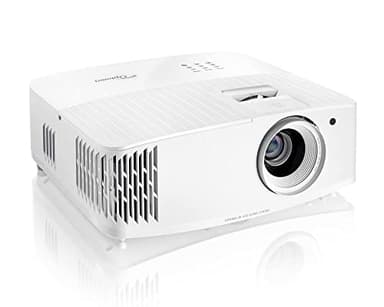
Optoma UHD38X
The most brightness per dollar in 4K: Optoma rates it at 4,000 ANSI lumens, enough for a room with lights on, plus a 4.2 ms mode at 1080p/240Hz for gaming. Lamp-based, no lens shift. Shopping strictly on budget? Our budget 4K guides go deeper.
4K UHD (DLP XPR) · 4,000 ANSI lumens · Lamp · Lag 4.2 ms (1080p/240) · HDR10, HLG · 3.6★ on Amazon
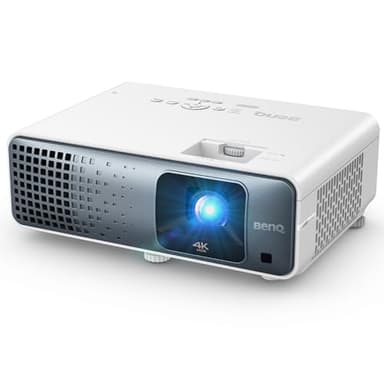
BenQ TK710
BenQ quotes 4.2 ms at 1080p/240Hz and 16.7 ms at 4K/60 (ProjectorCentral), which covers both competitive shooters and 4K console games. The laser light source holds brightness for years without lamp swaps, and it is rated at 3,200 ANSI lumens.
4K UHD (DLP XPR) · 3,200 ANSI lumens · Laser · Lag 4.2 ms (1080p/240), 16.7 ms (4K/60) · HDR10, HLG · 4.4★ on Amazon
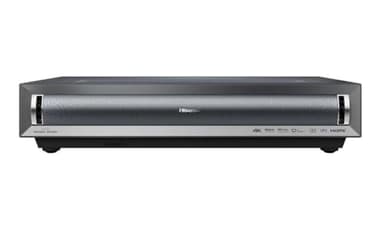
Hisense PX3-PRO
A TV replacement that sits a few inches from the wall: 0.22:1 ultra short throw, 3,000 ANSI lumens from an RGB triple laser, Dolby Vision and HDR10+, Google TV, and a 240Hz mode at 1080p. Pair it with an ALR screen made for UST projectors for daytime viewing.
4K UHD (DLP XPR) · 3,000 ANSI lumens · RGB triple laser · Dolby Vision, HDR10+
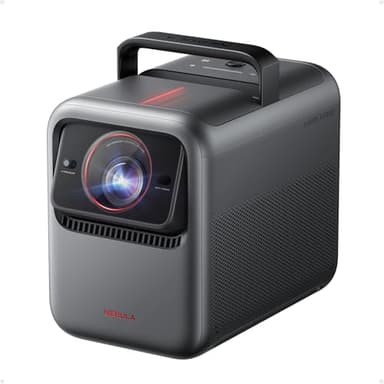
Nebula X1
The 4K projector you can carry room to room (or to the yard) without giving up brightness: 3,500 ANSI lumens from a triple laser, an auto-aligning built-in gimbal, optical zoom, Dolby Vision and Google TV with licensed Netflix. It runs on mains power; there is no battery.
4K UHD (DLP XPR) · 3,500 ANSI lumens · RGB triple laser · Lag <19 ms (game mode) · Dolby Vision, HDR10 · 4.4★ on Amazon
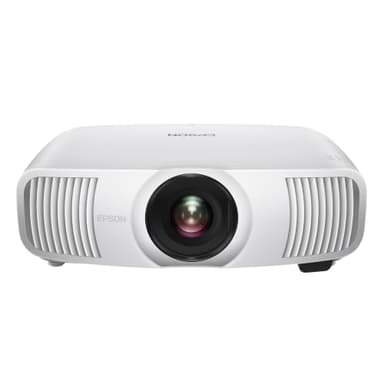
Epson Home Cinema LS11000
The step-up for a light-controlled theater room without paying native-4K money: 2,500 ISO lumens from a laser, a powered 2.1x zoom with huge lens shift (±96% vertical) and lens memory, HDR10+, and two HDMI 2.1 inputs that accept 4K/120 with under 20 ms of lag. 4K UHD via 3LCD pixel shift.
4K UHD (3LCD pixel shift) · 2,500 ISO lumens · Laser · Lag <20 ms (4K/120 capable) · HDR10+ · 4.2★ on Amazon
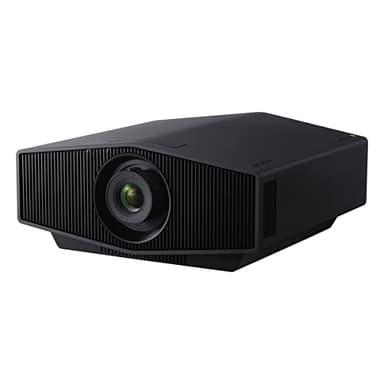
Sony VPL-XW5000ES
Sony’s entry point to current native 4K: three 0.61" SXRD panels with a full 3840×2160 pixels each (no pixel shifting), a 2,000-lumen laser light source, a 1.6x zoom and ±71% vertical lens shift. No HDMI 2.1, so it tops out at 4K/60. For a dark, dedicated room.
Native 4K (0.61" SXRD, 3840×2160) · 2,000 lumens · Laser · HDR10, HLG · 4.6★ on Amazon
4K Projectors Compared
Every model from this guide that is in stock right now, cheapest first, with how each one actually makes its 4K image.
| Projector | Price today | Brightness* | 4K type | Light | Throw | Input lag** | Amazon rating | Buy |
|---|---|---|---|---|---|---|---|---|
| Epson Lifestudio Flex Plus | $850 | 1,000 ISO | 4K UHD (3LCD pixel shift) | RGB LED | 1.2:1 | — | 4.1★ | |
| Optoma UHD38X | $899 | 4,000 ANSI | 4K UHD (DLP XPR) | Lamp | 1.50–1.66:1 zoom | 4.2 ms (1080p/240) | 3.6★ | |
| Nebula Cosmos 4K SE | $900 | 1,800 ANSI | 4K UHD (DLP XPR) | Laser + LED hybrid | 1.2:1 | — | 4.3★ | |
| ViewSonic PX701-4K | $976 | 3,200 ANSI | 4K UHD (DLP XPR) | Lamp | Zoom lens | 4.2 ms (1080p/240) | 4.2★ | |
| Epson Home Cinema 2350 | $1,100 | 2,800 ISO | 4K UHD (3LCD pixel shift) | Lamp | 1.34–2.17:1 zoom | 19 ms (4K/60) | 3.9★ | |
| XGIMI Horizon 20 Pro | $1,499 | 4,100 ISO | 4K UHD (DLP XPR) | RGB triple laser | Optical zoom, lens shift | — | 4.3★ | |
| Epson Home Cinema 3800 | $1,649 | 3,000 ISO | 4K UHD (3LCD pixel shift) | Lamp | 1.32–2.15:1 zoom, lens shift | 20.6 ms (4K/60) | 4.4★ | |
| XGIMI Aura 2 | $1,699 | 2,300 ISO | 4K UHD (DLP XPR) | Dual Light laser | 0.177:1 ultra short throw | — | 3.9★ | |
| BenQ X3100i | $1,799 | 3,300 ANSI | 4K UHD (DLP XPR) | 4LED | 1.15–1.50:1 zoom | 4.2 ms (1080p/240), 16.7 ms (4K/60) | 3.6★ | |
| Nebula X1 | $1,799 | 3,500 ANSI | 4K UHD (DLP XPR) | RGB triple laser | 0.9–1.5:1 zoom | <19 ms (game mode) | 4.4★ | |
| BenQ TK710 | $1,799 | 3,200 ANSI | 4K UHD (DLP XPR) | Laser | 1.15–1.50:1 zoom | 4.2 ms (1080p/240), 16.7 ms (4K/60) | 4.4★ | |
| Hisense PX3-PRO | $2,498 | 3,000 ANSI | 4K UHD (DLP XPR) | RGB triple laser | 0.22:1 ultra short throw | — | Not yet rated | |
| Epson EpiqVision Ultra LS800 | $2,512 | 4,000 ISO | 4K UHD (3LCD pixel shift) | Laser | 0.16:1 ultra short throw | <20 ms | Not yet rated | |
| Epson Home Cinema 5050UB | $2,998 | 2,600 ISO | 4K UHD (3LCD pixel shift) | Lamp | 1.35–2.84:1 powered zoom | — | 4.6★ | |
| Epson Home Cinema LS11000 | $3,500 | 2,500 ISO | 4K UHD (3LCD pixel shift) | Laser | 1.35–2.84:1 powered zoom | <20 ms (4K/120 capable) | 4.2★ | |
| Sony VPL-XW5000ES | $5,998 | 2,000 | Native 4K (0.61" SXRD, 3840×2160) | Laser | 1.38–2.21:1 zoom, lens shift | — | 4.6★ | |
| JVC DLA-NP5 | $7,000 | 1,900 | Native 4K (0.69" D-ILA, 4096×2160) | Lamp | 2x zoom, lens shift | — | 5.0★ | |
| Sony BRAVIA Projector 7 | $7,998 | 2,200 | Native 4K (0.61" SXRD, 3840×2160) | Laser | Zoom lens, lens shift | — | 3.4★ | |
*Manufacturer ratings. ISO and ANSI lumens are close but not identical; Sony and JVC quote plain lumens. **Manufacturer or ProjectorCentral figure in the fastest mode (often 1080p at a high refresh rate); a dash means none is published.
4K UHD vs Native 4K: What You're Actually Buying
- Native 4K (Sony SXRD, JVC D-ILA): the chips themselves have 3840×2160 or 4096×2160 pixels. New models start around $5,000.
- 4K UHD, DLP XPR (BenQ, Optoma, ViewSonic, XGIMI, Hisense, Nebula): a 0.47" 1920×1080 mirror chip shifts four ways per frame to place 3840×2160 pixels on screen. This is almost every 4K projector under $5,000.
- 4K UHD, Epson 4K PRO-UHD: three 1080p LCD panels shifted two ways. Epson markets it as 4K; it is pixel shift, not native.
- "4K supported" on cheap Amazon listings: a 1080p or 720p projector that accepts a 4K signal and scales it down. That is not a 4K projector.
On a 100-120" screen at normal seating distance, a good 4K UHD projector looks sharp; paying for native 4K mostly buys better contrast, lenses and processing. Full breakdown, with how to read an Amazon listing: native 4K vs 4K supported projectors.
How to Choose a 4K Projector
Brightness (ANSI or ISO only)
Dark theater: 1,500-2,000 lumens. Living room with some light: 2,500-3,000+. Daytime: 3,000+ and an ALR screen. Only trust ANSI or ISO 21118 ratings; a "12,000 lumen 4K" listing is neither. Our lumens guide explains the standards.
HDR
HDR10 is standard on every pick here and most add HLG; HDR10+ and Dolby Vision appear on some. Projectors can't hit TV-level HDR brightness, so tone mapping (and a bright enough engine) decides how good HDR looks.
Input lag
Gaming DLP models quote about 4 ms at 1080p/240Hz and about 17 ms at 4K/60; Epson's 3LCD models run about 20 ms. Under ~20 ms feels responsive for console games. Compare models in our input lag database and gaming projector guide.
Throw distance
Standard throw (about 1.2-2:1) needs roughly 9-15 feet for 100". Short throw fits 100" in about 3-6 feet (best 4K short throw), and ultra short throw sits inches from the wall (UST projectors).
Laser or lamp
Laser and LED sources are rated around 20,000+ hours and turn on instantly; lamps dim over a few thousand hours and need replacing. Lamp models still win on brightness per dollar. More in laser vs lamp projectors.
Lens shift and placement
Real optical lens shift (Epson, Sony, JVC) lets you mount off-center without digital keystone, which softens a 4K image. Most DLP models offer little or none, so place them square to the screen. See home theater projectors for mounting-friendly picks.
4K Projector FAQ
What is the best 4K projector?
For most people, the Epson Home Cinema 3800. It depends on the room and budget: a bright, standard-throw 4K UHD model for a living room or basement theater, an ultra short throw "laser TV" if the projector has to sit by the wall, a low-lag model like the BenQ TK710 for gaming, and a native 4K Sony or JVC only for a dedicated dark theater with a budget around $5,000 and up.
What is the best 4K projector for home theater?
For a light-controlled theater room under native-4K money, the Epson LS11000 (laser, powered lens, wide lens shift, 4K/120 input) or the Epson 5050UB. If the budget reaches native 4K, the Sony VPL-XW5000ES is the entry point, with real 3840×2160 panels instead of pixel shifting. In a family room with some ambient light, prioritize brightness: the Epson Home Cinema 3800 (3,000 ISO lumens) is the usual pick.
Is a 4K UHD projector real 4K?
It puts a 3840×2160 image on screen, but not from a 4K chip. Most 4K projectors under about $5,000 use pixel shifting: DLP XPR shifts a 1920×1080 mirror chip four ways (or a 2716×1528 chip two ways), and Epson 4K PRO-UHD shifts 1080p LCD panels two ways. Native 4K projectors (Sony SXRD, JVC D-ILA) have 4K panels. Cheap projectors labeled "4K supported" are a different thing again: they accept a 4K signal but display 1080p or less. See our native 4K vs 4K supported guide.
How many lumens does a 4K projector need?
In a dark theater room, about 1,500-2,000 ANSI or ISO lumens is plenty for a 100-120 inch screen. A living room with some light needs 2,500-3,000+, and daytime viewing works best with 3,000+ lumens plus an ambient light rejecting screen. Use ANSI or ISO ratings only; cheap listings that claim 10,000+ "lumens" are not measured to either standard.
Is 4K worth it on a projector?
Yes, at 100 inches and up, where the extra detail over 1080p is easy to see from a normal seating distance, and because most 4K projectors are also the ones with HDR support and modern processing. Below about 80 inches, or if your room has a lot of light, brightness and contrast matter more than resolution.
Which HDR formats do 4K projectors support?
Nearly all accept HDR10 and HLG. Some add HDR10+ (Epson LS11000, JVC) or Dolby Vision (Hisense PX3-PRO, Nebula X1, XGIMI Horizon 20 series). Projectors are far dimmer than HDR TVs, so how well a model tone-maps HDR matters more than the logo list.
What is the best 4K projector under $1,000?
The Optoma UHD38X is the brightest and best for gaming in that range, rated at 4,000 ANSI lumens with a 4.2 ms 1080p/240Hz mode. For compact smart models, cheaper picks and price-sorted lists, see our best 4K projector under $1,000 and best budget 4K projector guides.
Related Guides
Explore Other Projector Categories
Projector Deals Right Now
Live price drops, screened to filter out inflated MSRP discounts
Projector Gift Guide
Gift picks for gamers, kids, movie lovers & travelers
Best Budget Projectors 2026
Top cheap projectors under $800 with reliable performance
Best Gaming Projectors 2026
Best gaming projectors with low input lag for PS5/Xbox
Popular Projector Comparisons
View all 69 comparisons →Epson 5050UB vs Epson 4010
Is the 5050UB worth the premium over the 4010?
Epson 5050UB vs BenQ TK710
3LCD lamp vs DLP laser for serious home theater
Epson 5050UB vs Sony VW295ES
Pixel-shift 4K vs native 4K SXRD for home theater
Epson 5050UB vs Sony VW325ES
Premium home theater: value pick vs native 4K
Epson vs BenQ
Which brand should you buy? 3LCD vs DLP explained
XGIMI vs Nebula
Which smart projector brand to buy, class by class